Recently, I have been observing children at the early stages of writing as they come to realise that writing can be their own. It has made me think again about how they encounter writing and what they make of it.
We aren’t born knowing how to write, but we are born to know how. — Ann E. Berthoff Forming, thinking, writing: The composing imagination (Hayden Book Co, 1978)
Every so often, I return to Ann Berthoff’s book, Forming, thinking, writing because it always guides me to think afresh about the composing process in relation both to my own writing and that of young writers.
Berthoff’s book is intended ‘for those who want to teach composition primarily and centrally and not just as an adjunct to the study of poetry, short fiction and essays.’ She describes the whole book as ‘a study question’. It is a collection of assisted invitations to students of composition to discover what they are trying to do and thereby how to do it.
Each invitation includes an exercise which is both writing task and reflection and is supported by examples and an exploration of related theory. The idea is that the writer should use their directed writing and subsequent reading and reflection as a way of discovering and articulating the ways in which they write.
This is not a book about how to write poetry or fiction but begins with the making of meaning. Berthoff says ‘My guiding philosophical principle is that this form-finding and form-creating is a natural activity; the book’s central pedagogical principle is that we teach our students how to form by teaching them that they form’ As she says, in her first chapter, ‘We aren’t born knowing how to write, but we are born how to know how.’ Although the text is directed at teachers of adults and their students, it helps me to think not only about the ways in which I compose, but also about the ways in which young children compose as they start on their writing careers.
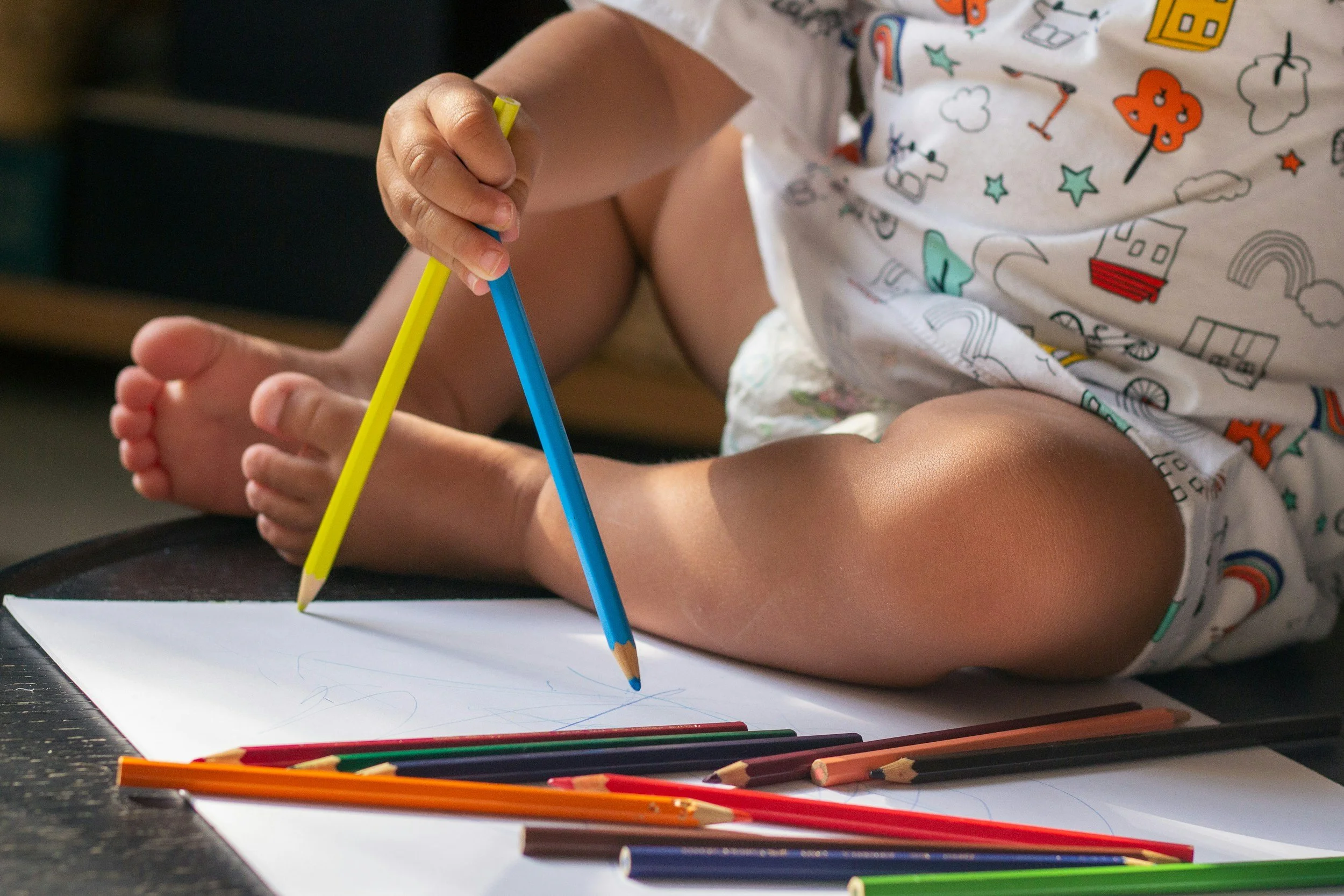
Our awareness of writing processes from the inside out serves not only to develop our own writing but also to inform our teaching. I accept the invitations in the book and I use them to think further about young children and their writing. Berthoff maintains that what we do when we write involves the same acts of mind as those involved when we make sense of the world. Children are driven, from the moment of their birth, to make sense of their world and that drive is reflected in the way that they make marks on paper. What they do may look like scribble or blocks of colour; it may involve drawing and putting down letters and words; the physical energy of making the marks may be more important than the marks themselves. Each child does this in their own way. There is not a one size that fits all way of establishing children as confident writers.
Last week, children in the Year 1/ 2 class made their own catalogues after looking again at The Babies Catalogue by the Ahlbergs. Each child was free to choose their own theme and design. There were catalogues of tractors, food, dens, favourite things, art movements (yes, art movements). The variety was a pleasure to experience. Drawing and writing sat side by side, integral to the composition and taught us a great deal about each child’s composing process and where they are along its continuum. I will write more about their exuberant drawing and writing another time. Today, I want to share these words from Berthoff:
When you write, you don’t follow someone else’s scheme, you design your own. As a writer, you learn to make words behave the way you want them to.
This sums up beautifully what I would like all children to experience: the chance to keep designing the scheme, learning to make words behave the way they want them to; and to maintain that sense of authority, to understand that they are in charge of their own writing and that they are developing ways to make that happen.