Theresa Gooda joins Canterbury Writing Teachers on a writing adventure in Faversham
On Saturday I found myself sitting on a wooden bench at a sloping school desk with its porcelain ink well, looking up at a blackboard with the date neatly written and underlined in chalk. Some pupil’s initials had been carved into the bench in the time-honoured fashion, and layers of chalk dust highlighted the grain of the wood.
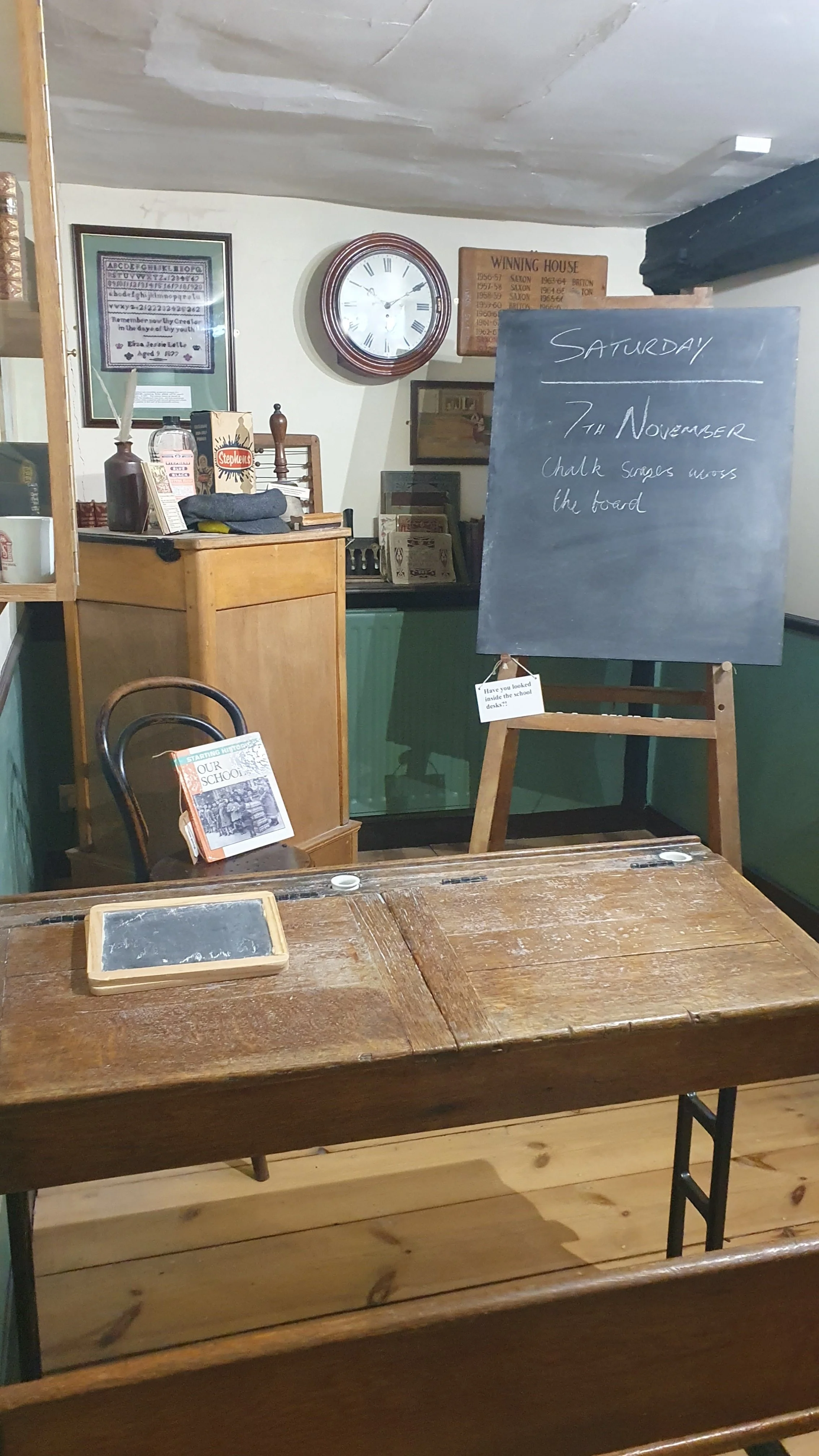
I’d time-travelled, thanks to Faversham’s Fleur de Lis Museum, to contemplate the lives of students and teachers in Victorian times alongside members of the Canterbury Writing Teachers group.
Although I’m based in West Sussex, I occasionally stay with family in Kent and have become an occasional member of the Canterbury group, facilitated by Dr Sam Holdstock, Senior Lecturer in Secondary Initial Teacher Education and subject leader for English at Canterbury Christ Church University.
Sam’s group is a lovely mix of teachers embarking on their teaching journey and established teachers now a few years into their career. What a testament to the power of teachers writing together that they continue to do so, and value the practice — even with all the demands that those early years in the classroom bring.
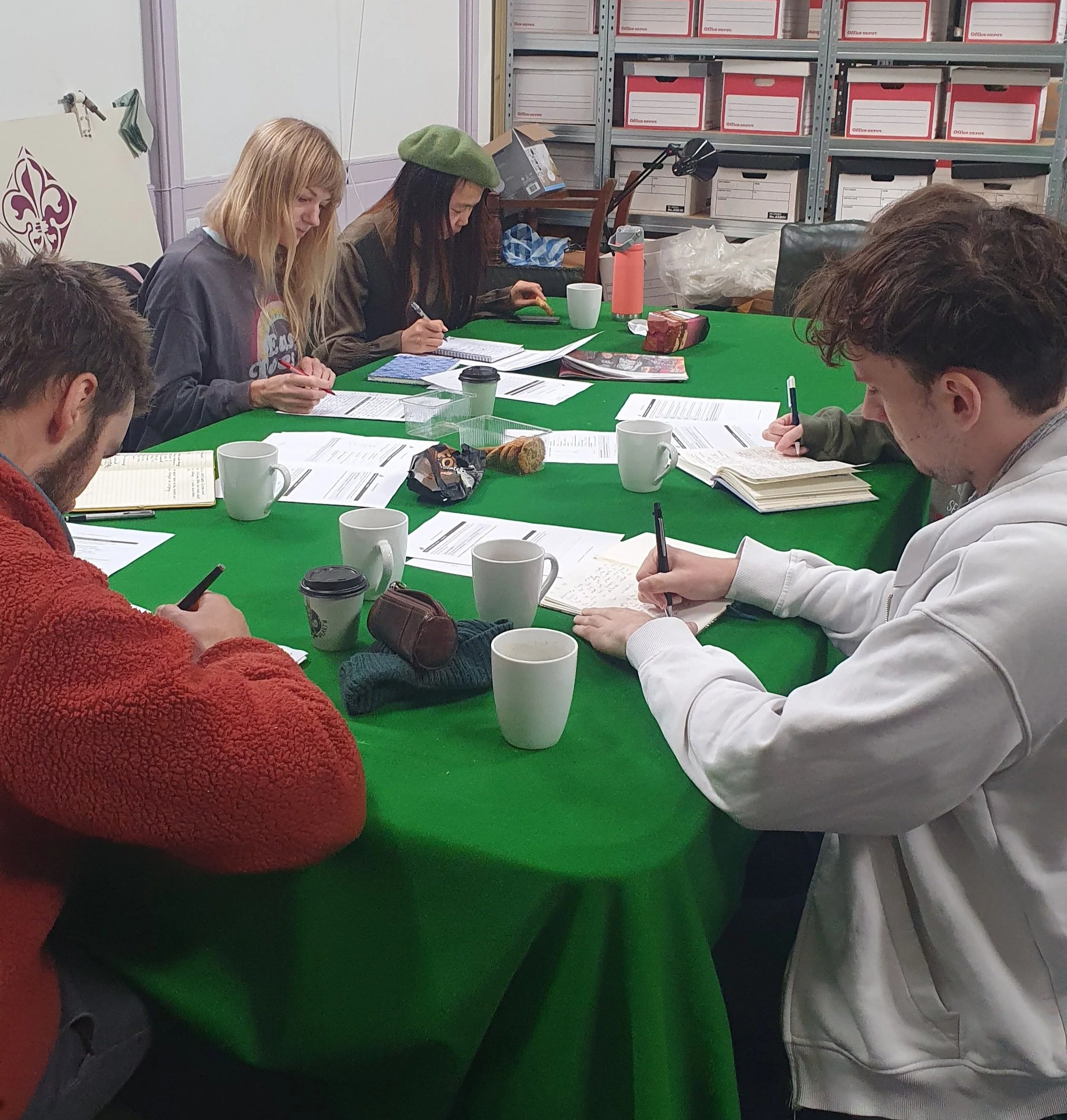
The session was expertly led by Alexa, a teacher at the Whitstable School and volunteer at the museum. Having led creative writing workshops over the summer, she shared her approaches enthusiastically with her fellow writing teachers, taking us on an imaginative adventure into the classrooms of the past.
We were invited to immerse ourselves in the space and explore the museum schoolroom slowly; recording specific, concrete details, mixing words and fragments, noting smells and feelings that we could use in our writing later on. Alexa’s prompts encouraged us to contemplate the various objects around the Victorian schoolroom: an old leather satchel, the hand bell to signal breaktimes, the work-cards, the jar of Stephen’s Writing Fluid that filled the brown earthenware ink well at the front, the dip pens and chalk slates, the embroidered sampler on the wall, and my favourite: the rastrum, or stave-liner: a multi-pronged wooden and wire gadget that holds five pieces of chalk to allow a teacher to glide across the board and draw a complete musical stave in a single action.
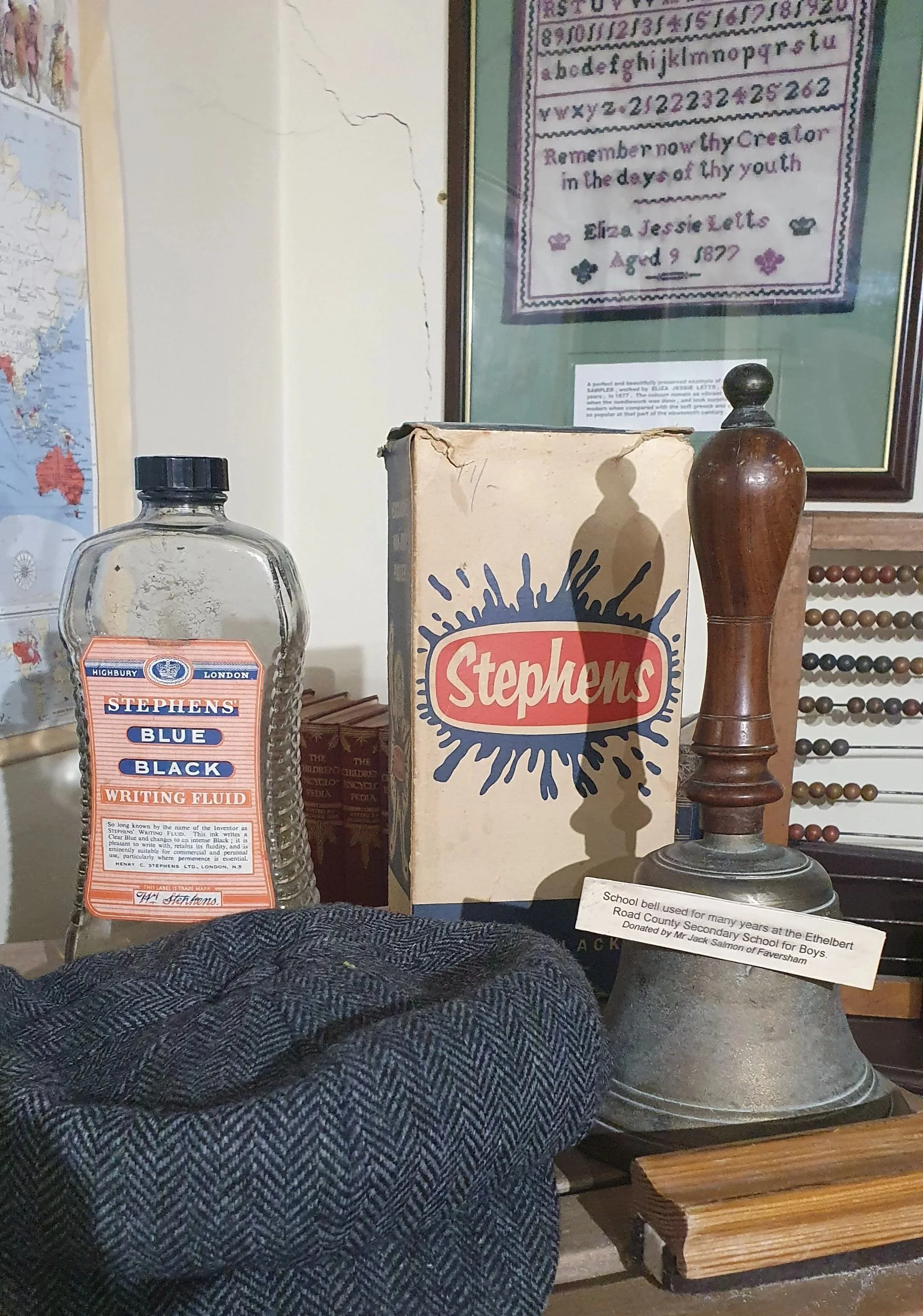
Becoming ‘object detectives’ we were asked to zoom in on a single object, sketching it, studying it first as a historian and then as a writer, letting wear, weight, material and marks suggest the people who had handled it.
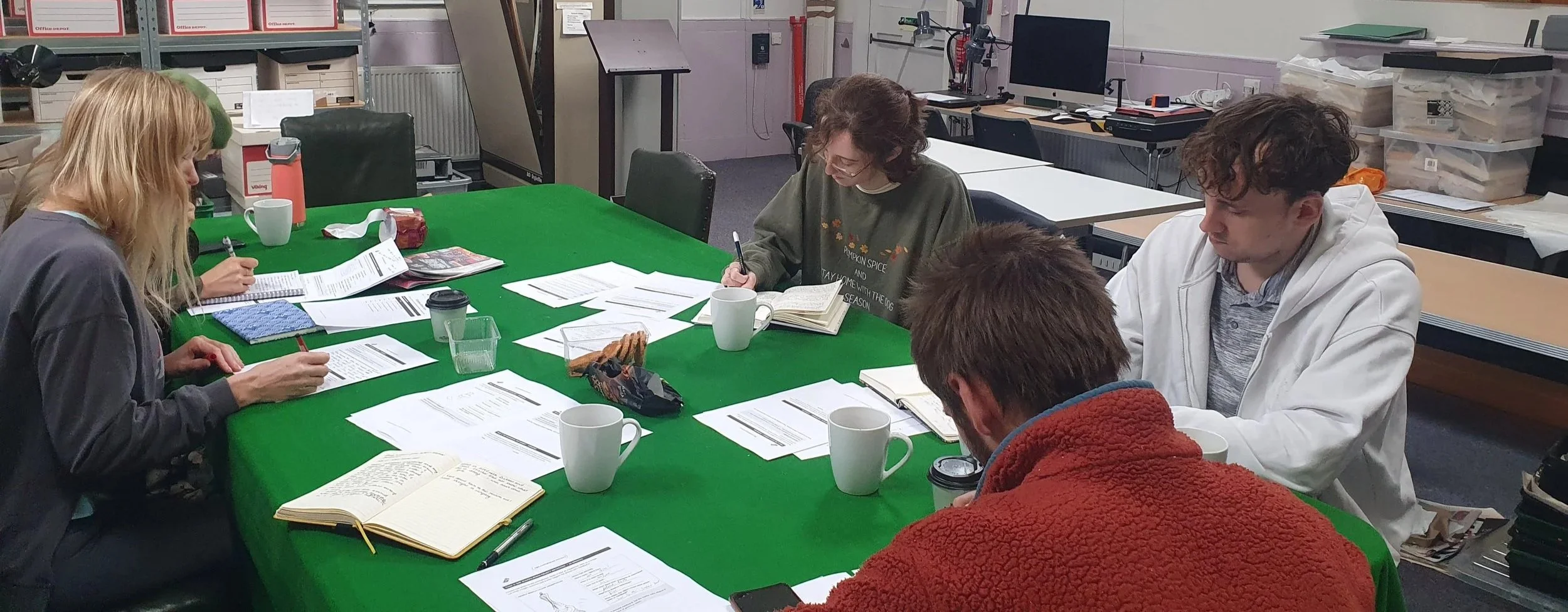
Back in our writing room on an upper floor of the museum, we were led to think about the timetable of a typical Victorian school day starting with students lining up to have their hands, faces and boots inspected for cleanliness before entering and beginning with a prayer or hymn. Reading, writing and arithmetic with repeated answers and careful copying of copperplate letters, skills such as needlework and military-style physical drills.
We were invited to allow our objects to ‘speak’ and play with personification, before writing about a single moment in the schoolroom from two perspectives: the teacher and the pupil. Perhaps because I was surrounded by PGCE teachers and ECTs, I found that my thoughts turned back nearly 30 years to my own first teaching practice. How fascinating to relive a moment from that time not just from my own memory, but as an exercise in seeing things from the student’s point of view. What a rich seam memory is for writing.
The resulting discussion led, not just to contemplation of the different stages of the writing process, but also to the challenges of managing AI as teachers in contemporary classrooms. It struck me that, as we navigate our own technological revolution, we share more than we think with those ghost teachers and pupils of 150 years ago.
In an era increasingly dominated by automated text, spaces where teachers gather to write authentic thoughts and memories onto a physical page feels more revolutionary than ever. My morning in Faversham was a beautiful reminder that our own stories are the richest teaching tools we possess. I’m grateful to Alexa, to Sam, to the other participants and to the welcoming staff at the museum for an inspiring morning of writing, sharing and creative renewal.