September Daily Writing Prompts (2)
Letter Writing
A month of letter writing
-Dr Jeni Smith
I discovered (on the 1st September), through English PEN, that the 1st September is World Letter Writing Day. https://nationaldaycalendar.com/celebrations/world-letter-writing-day-september-1
Who knew? Not me. It prompted me to suggest some ideas for writing that focus on the letter form. I have gathered 30 or so ideas for the month of September, though they are not designed to be approached as a prompt a day. If you wanted to make them work like that then I am sure that is possible …
I quite often return to letter writing for a number of different reasons. It works well as a personal practice both for writing and for connection with others. I love to see a handwritten envelope fall on my doormat and it gives me pleasure to write in many different ways to friends and family.
I also like the idea of the unsent letter – the letter that you are unable or unwilling to send for one reason or another. These are often highly personal and often mentioned in the context of writing journals. In a similar vein, such letters, sent or unsent can be written to an unborn child, a long dead ancestor, one’s younger or future self.
The epistolary novel has seen quite a resurgence recently – The Correspondent by Virginia Evans currently has 191 reserves at my county library which holds 43 copies. It is an intriguing and quite challenging way of telling a story. One of the things that I like about the letter, especially in fiction, is that it encourages a direct line to a character’s voice. We can imagine our character from the inside and be aware of their quirks, obsessions and limitations. I find that the letter form makes it easier for young writers to capture a voice that is different from their own.
The letter invites invention and flexibility. It can be intimate, intensely personal, exploratory. It can be private but equally a wonderful way of making connection with others. It also lends itself nicely to parody and the spoof.
This month’s collection of ideas for writing invites solitary reflection, personal connection or a dive into narrative. Many of the ideas are not fully formed; the links included take you to a range of letters and people writing about letters. I hope that these will prompt you at least to think about letters and to experiment a little, writing in letter form for yourself, for others, or as an entry into fiction.
· Write to an imprisoned writer
Freedom to write
Freedom to read
English PEN is one of the world’s oldest human rights organisations and gave rise to International PEN. It supports International writing and translation and campaigns for writers who have been imprisoned for their writing. It was an e-mail from them that alerted me to World Letter Writing day.
https://www.englishpen.org In much the same way as Amnesty, English PEN encourages us to write letters and cards to imprisoned writers. This might be something that you would like to do. These guidelines published by English PEN are helpful when thinking about writing with sensitivity to the imprisoned:
https://www.englishpen.org/wp-content/uploads/2025/10/PENWrites-guidelines-2025.pdf
· If you want inspiration, you need go no further than Shaun Usher’s splendid collection of letters in Letters of Note. Go to his website to find out more
https://news.lettersofnote.com
Here is a little taster from J R R Tolkein’s letters:
May I say now at once that I will not tolerate any tinkering with the personal nomenclature. Nor with the name/word Hobbit. I will not have any more Hompen (in which I was not consulted), nor any Hobbel or what not. Elves, Dwarfs/ves, Trolls, yes: they are mere modern equivalents of the correct terms. But hobbit (and orc) are of that world, and they must stay, whether they sound Dutch or not... If you think I am being absurd, then I shall be greatly distressed; but I fear not altered in my opinions. The few people I have been able to consult, I must say, express themselves equally strongly… I am no linguist, but I do know something about nomenclature, and have specially studied it, and I am actually very angry indeed.
J.R.R. Tolkien
Letter to his publisher, Rayner Unwin
3rd July 1956
Letters of Note contains many letters of protest, from the very angry indeed to those bordering on the absurd. There are any number of things in our lives that we find upsetting, if not intolerable. Write out your anger and dismay, send it if you dare!
Write to An Imprisoned writer
· The everyday
The Paston Letters and the Vindolanda Tablets
https://www.thisispaston.co.uk/paston_letters.html
https://www.vindolanda.com/blog/fact-file-writing-tablets
The Paston letters were written by a Norfolk family in the 15th century. The Vindolanda tablets were written by men and women posted on Hadrian’s Wall during the 1st century AD. Both of these collections give an insight into daily life and preoccupations of the time. Here is the wife of a commander writing to her friend:
Claudia Severa asks Sulpicia Lepidina to come to her birthday party on September 11th. She also asks after Lepidina’s husband and children. Lepidina is the wife of the commanding officer at Vindolanda and she is mentioned in two other writing tablets from the site.
Try writing a letter to a friend and see how it reflects our lives now. Or try writing a letter from an invented character to another, which gives insights into their lives, characters and relationship.
· Prayer Before Birth Louis Macneice
https://www.blueridgejournal.com/poems/lm-prayer.htm
You may well already know this poem, written during the second world war. It is worth revisiting. It is a prayer, a message, a letter.
Write now, a prayer before birth.
· Epistolary novels
As long as there have been novels, the letter has been a possible form. We seem to be using letters and other documents in increasingly inventive ways. Here’s one list from The Guardian 2017:
https://www.theguardian.com/books/2017/jun/14/top-10-modern-epistolary-novels
You will have your own favourites. How about a short story told through letters, e-mails, WhatsApp messages? Or write a story with a fellow writer, each taking on one or more characters. Years ago, the class I was teaching and I wrote amongst ourselves a series of increasingly weird stories starting with each of us writing a letter which was then distributed at random amongst the class. Thinking about it now, I can’t imagine how we organised it, but I do remember that it was exciting -the receipt of virtual post and the writing of replies with a freedom that may not always be possible when the recipients are real people.
· Letters on paper – the nature of the form
When Jon McGregor took up a post at Nottingham University to teach creative writing, he wanted students to engage with other people’s writing before they faced the blank page. He set up a literary journal that invited people to write letters to him which then became material for the journal. He writes:
But I wanted it to be a literary journal that could find an underhand way of being literary; to take the self-consciousness out of being literary. I’ve always been interested in the kinds of writing people do when they don’t think they’re being asked To Write, and I’d been thinking about letters as a form; wondering about the differences between letters-on-paper and emails, reflecting on my own letter-writing history, noticing the democracy of correspondence as a literary practice. So the idea was born.
https://www.theguardian.com/lifeandstyle/2016/nov/26/from-me-with-love-lost-art-letter-writing
The letters page
http://www.theletterspage.ac.uk/index.aspx
It looks as if the journal is no longer active, but that needn’t stop you writing a letter for such an audience or to begin writing about something important to you in letter form. Consider the ways in which this does or does not affect the way you write.
· The Jolly Postman or Other People’s Letters. I feel sure you must know this inventive and much-loved picture book by Janet and Allan Ahlberg and, if not, go out immediately and discover its pleasures!
I include it here as an invitation to write a series of letters delivered by the Jolly Postman on his rounds in any story world you choose. The Ahlbergs, writing for children, chose the world of fairy tale – Goldilocks to the three bears, the three little pigs solicitor to the Big Bad Wolf – you can choose your own letter writers. Fairy tales provide a rich source of ideas, but what about the not so jolly postman cycling across the Yorkshire Moors delivering letters from Heathcliffe, Jane Eye, and the tenant of Wildfell Hall? You will have a favourite novel, series or author. This is a chance to play.
And the post you create might include:
· An Invitation, to a party, an assignation, a political meeting, a private view.
· A Catalogue: the Jolly Postman delivers a catalogue for spells and other witchy accessories to the witch. This idea allows for drawing and writing -all the needs of an amateur sleuth, a Greek warrior trying to get home from Troy …
· An Apology: what have they done? are they sorry? What amends can be made?
An Apology…
· A letter to friends or family from a holiday – where has your character chosen? And are they having a good time? What details do they choose to reveal?
· The Jolly Postman delivers a solicitor’s letter. Try your hand at a formal missive.
· It is a character’s birthday, or an anniversary: who will write to them and how? What might they have to say?
· Here is a link to The Marginalian writing about a nineteenth century guide to letter writing. Simply enjoy. Though you could also try writing a guide for 21st century writer of letters or e-mails.
https://www.themarginalian.org/2012/12/21/how-to-write-letters-1876/
· The unsent letter Writing a letter that will not be sent and, in some cases, cannot be sent because the recipient is no longer alive, can be tremendously useful. We can write in ways and about things that we may not be able to write to the person directly. It helps us to sort out our thoughts and feelings and can be a way of exploring our relationship with someone who was alive long before we were born. Sometimes we feel hurt or angry or uncertain. An unsent letter allows us to release and explore feelings without hurting the other person.
· Write to someone from your past who you are no longer in touch with or perhaps have never known – a great grandparent, for example.
· Write a letter to your future self. Keep it for later.
· Or write a letter to your younger self. Or write both!
· Write to yourself – and post it.
The idea of writing to oneself, kindly and directly, comes from The Joy of Writing Things Down The Everyday Zen of Putting Pen to Paper Megan C Hayes. She suggests some ways of starting such a letter:
I have been meaning to tell you that …
I wanted to remind you …
I know you have been wondering about …
I had always meant to say …
The advice I have for you this moment is …
It occurs to me that you could just write to yourself and send it through the post. Why not? Send it from a holiday, maybe. Send it second class so that it will take a little time.
· Write with a friend. You may have a writing friend with whom you could have a correspondence. Perhaps you could agree to write to each other every few days of this month.
· From where I am sitting Write a letter which includes a sense of where you are and at what time of year and day you are writing.
Here is Jon McGregor writing about the letters he received for his journal project:
This sense of duration was also borne out by how many of the letters we read wanted to give a sense of where they were, in both space and time: I am sitting at the kitchen table; I am in the garden, under the apple tree; I can hear the children in the bath upstairs and will soon have to fetch them. In that sense, a letter is more “composed” than an email.
· Dear Diary. Many diary writers write in letter form, some even giving their diary or an imagined audience a name -Anne Frank wrote ‘Dear Kitty…’ It is perhaps about giving one’s unknown audience a character.

Dear Diary…
· The anonymous (or not) collage message: the ransom note, the poison pen, or maybe a joyful message spelled out in words and letters cut from newspapers and magazines.
· Write a letter that kickstarts a story – it could be an anonymous threat but any kind of letter can provide the momentum: a friend whom you have not heard from for twenty years; a suspiciously long lost relative; a letter opened in error….
· Learning the craft of storytelling. Here is Jon McGregor again:
I was commuting 30 miles a day to college, and spent the time writing about the people I saw on those journeys; and what I didn’t know, I made up. Without really thinking about it, I was experimenting with ways of telling a story, ways of holding a reader’s attention, playing with voice and form and technique; and the friends writing back were doing the same. The boundary between fact and fiction was blurred, but in truth we were only asking about each other’s lives. Through these letters, I was learning about the small corners of the world my friends inhabited: in towns in Dorset and Devon, in south Wales, in north London, in the West Midlands, in Kent. These letters were making physical journeys from places I’d never been, bringing news from elsewhere.
Write from somewhere other than home – on a train if you travel that way, in a coffee shop, at the bus station… Write what you see and hear. Write to a friend who might enjoy what you have to say.
· The Sunday Letter Project was conceived by a couple who run a stationery shop.
https://www.thesundayletterproject.com
The idea is that you make a commitment to writing a letter to someone every Sunday. They write:
Participants can make a personal commitment to carve out a moment to write a letter every Sunday. You can sign here to help give us an idea of numbers of participants and receive weekly creative writing prompts, or simply write alongside us privately.
· Write to a stranger. There are a number of organisations which invite us to write to people we don’t know -Amnesty International comes immediately to mind, but there are also organisations which invite letters for the lonely or unwell. It might be something that you would like to do.
· Write to nearby strangers. I once read about an artist who wrote to everyone in the village where they lived. I don’t know what the letters said (or were they cards? Or poems?) and whether or not they were anonymous. I have thought about this often but never felt able to do it, though anyone using social media is like to do the equivalent of this on a regular basis. I do think a card could be a nice thing, maybe for people who live next door, or whom you know to say hello to, just for them to receive the gift of a few unexpected words. As I write this, I can imagine people who know me well laughing at me, but I think it is an idea that is worth playing with. Perhaps the thing to do is to start in somewhere like the workplace. A head teacher I knew kept a bunch of cards in their desk and wrote them to children and staff for many reasons.
· Write to us! Write to us at NWP to tell us more about yourself and what you find useful about the website, what you would like to see more of, to tell us about where and what you write and with whom, to share some of your writing, to become part of this community of teacher writers.
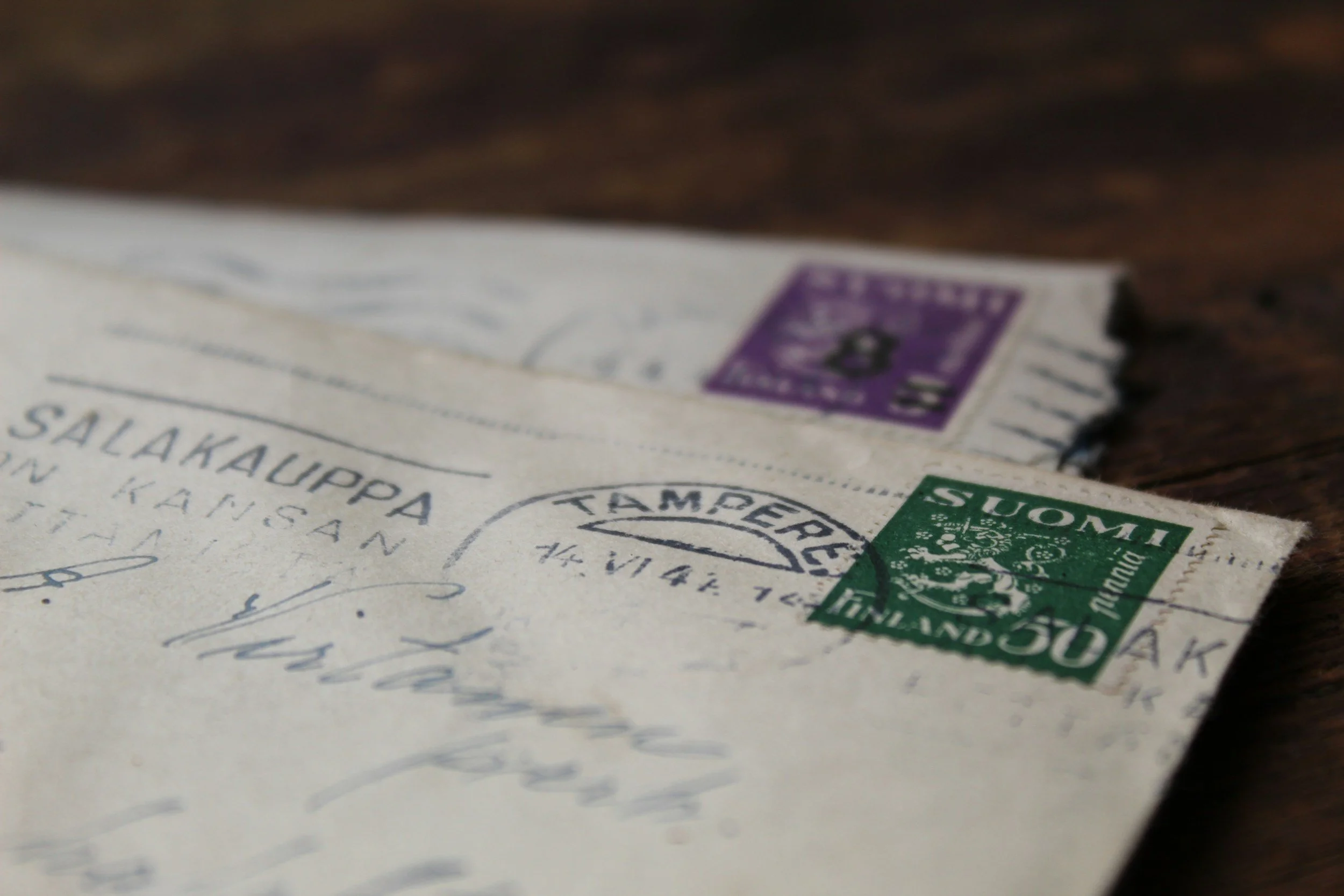
· Something to hold in my hand. Finally, a return to Jon Mcgregor, writing this time about the physicality of a letter. It is good to receive a friendly e-mail, but a letter, with its choice of stationery, its idiosyncratic handwriting and choice of pen, its feel and smell, the ease with which one can return to it; a letter holds great power for friendship and connection. Here is McGregor, and a retired postal worker from Canada:
But the closing letter, fittingly, is from a retired postal worker in Alberta, Canada – Ken Sears. He writes about the letters he sorted during his career, and how he learned to spot the ones from prison, from lovers, from the person with hypergraphia, or people behaviourally compelled to write; and about how now, in retirement, despite a lifetime of seeing most of the mail he sorted as just so much landfill, he continues to write letters, “Because it’s a big, cold universe, and it feels just a little warmer believing there’s somebody out there, somewhere, who knows you’re still alive. I’ll keep on writing them, and the brothers and sisters down at the local PO will keep shoving them along. They make a few bucks. I draw my pension. I learn a few things and everybody’s happy.”
Something to hold in my hand…