November Daily Writing Prompts (1)
Memoir: Part One, November 1st to 5th
Memoir, Prompts 1-5
Take ten minutes a day through the month of November to undertake some memoir-inspired writing.
November 1st
In Hinterland, a print and digital magazine devoted to new creative non-fiction, Jarred McGinnis and explores the unreliable and fluid nature of our memories:
Memories are not a recording of fact, but the story you tell yourself about the last time you remembered that memory, which is being remembered by a different you in time, space and experience.
How close we are, as writers of literary non-fiction, to writers of fiction. He suggests:
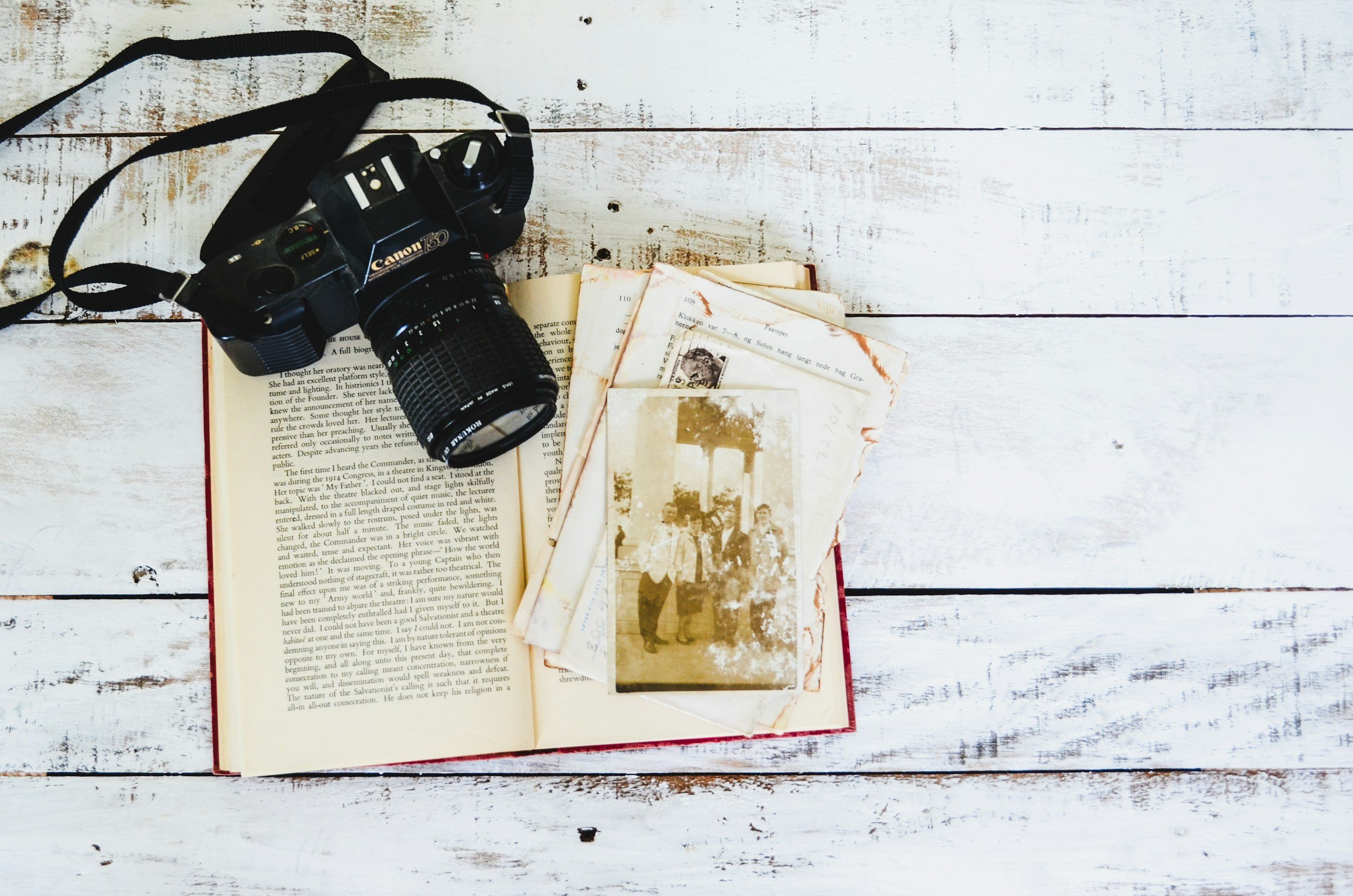
Writing a memory that we couldn’t possibly have: something that you have been told, that happened before you were born, that exists for you only in a photograph or in someone else’s story.
November 2nd
If you are a regular visitor to this website, it is more than likely that you already know about Natalie Goldberg’s lovely book that prompts us, no exhorts us, to write memoir. You may already know one of her earlier books – Writing Down the Bones, perhaps – and this one is full of that same enthusiasm and zest. Our minds, Goldberg says, work in a zigzag way. We don’t remember in an orderly chronological fashion; one remembered detail leads to another and before we know it, what began as a thought of Cheerios leads us, hop, skip and a jump to ‘the first time we stood before a mountain and understood kindness’. How many times, when writing in a workshop, has at least one person said, ‘Well, I hadn’t expected to write that. I’d forgotten all about that green cardigan…’ or whatever has emerged in the writing.
Memoir is not about the grand life story. It is about making sense of all the small things -which sometimes turn out to be much bigger things – now, at this moment.
Old Friend from far Away is a book of short sections, some no more than six words long. Each one is a provocation to write, and to write boldly and without fear. It is the book that I turn to most frequently when I need inspiration for my own writing or for a workshop. It speaks directly to the reader with warmth and encouragement. Natalie Goldberg writes:
Writing is … not a diet to become skinny, but a relaxation into the fat of our lives. Often without realising it, we are on a quest, a search for meaning. What does our on this earth add up to?
And with that in mind, here’s one of those short prompts. Potatoes. Write everything you know about mashed potatoes.
Or what about Say: Often in the middle of a timed writing practice you feel muddled, you are not really saying anything. Try this: don’t even wait to finish your sentence, right in the middle put a dash, then write, “What I really want to say is,” drop to a deeper level, and keep going.
NOVEMBER 3RD
Nigel Slater’s A Thousand Feasts is a ‘memoir of sorts’ and a truly wonderful book. Not only does it demonstrate an excellent way of writing and compiling a memoir, but also it would make a wonderful gift. Place it on your wish list; add it to your list for someone you love.
Nigel Slater keeps kitchen diaries. It is part of his practice as a chef and food writer. But he also keeps notebooks. He keeps notebooks in the way that many of us would recognise. They are pocket books and cheap ring-bound notepads; a faded pink exercise book bought in Delhi, manilla-covered school books, a blue ring-bound journal. Some notes are written on envelopes or loose sheets of paper. Sometimes he writes in pencil, sometimes in pen. Often he writes no more than a sentence. He writes in response to the need to keep a written record of the good things. Each one, he supposes, is ‘a short story to remind [him] of something, ordinary or extraordinary, …They are chronicles of quietness and calm, busy days in the kitchen and sensuous afternoons spent in the garden.’
He describes the sadness of jelly babies and eating a hot cross bun; a greeting of shoes in Kyoto; a description of his writing desk; queuing for sheeps’ heads in Teheran; a diary of the tulips in his garden.
The way damson stones float to the top of the pan when you are making jam.
Six white-shelled eggs, stamped with green and pink in a green egg carton. As pretty as a box of fondant creams.
The luminous green moss that grows on the sides of a terracotta flowerpot.
Of course, there are many meals and the cooking and growing of food. The memories come from travels across the world and the happiness of home. Your ‘small moments of joy’ will have a different flavour. They will be yours. Look back through your notebooks and make your own collection of feasts. Capture the moments.
NOVEMBER 4TH
In Leila Berg’s memoir, Fliickerbook, first published in 1997, Berg recalls what is was like to be growing up in Salford from 1921 to 1939. She writes from the point of view of the child she was, making sense of what it meant to be a girl, Jewish, interested in words and stories, making sense of what was often the puzzling and unthinking behaviour of adults. Her story is built of many small pictures, put together like a flickerbook. Like Nigel Slater, sometimes she writes only one or two sentences before she moves on to the next thought. The pictures build up to make the story and draw us into thinking about how a child builds a picture of who they are and what it is to be in the world. Each tiny picture is vivid and provocative. A TES review observed that the book ‘goes a long way to explain why Leila Berg has spent so much of her life fighting fiercely and often provocatively for the right of children to be listened to and accepted.’
I love the colours of hopscotch when they are scrunched together by feet. They go thick and fat and creamy. When they are separate they are thinner.
I keep reading about The little Match Girl, and about The Red Shoes. How cruel is has to be, being a little girl. But I need to know.
The most horrible thing about Opening Medicines is the way they pretend to be Licorice Allsorts. I don’t mean you think they are Licorice Allsorts. But they pretend. But you know they aren’t.
Our memories are often fragmentary. Sometimes we remain puzzled by things that puzzled us when we were five or even ten. Try capturing some of your own early memories. Just a sketch of what you remember. No need to fill it out with extras.
November 5th
I wouldn’t be a writer if I wasn’t deaf.
With my deafness I have a bivouac around my imagination.
No distractions, and my mind is free to roam.
Adam Pottle, Voice: On Writing With Deafness
NOVEMBER 5TH
Adam Pottle’s book, Voice, is a book full of energy and anger and humour that allows us a glimpse into the world of a boy and man who is profoundly deaf. It is a vital book for any teacher because it makes us think about, and invites us into, the world of those with hearing loss. And it disrupts and enriches our ideas and beliefs about writing. Its second part Deafness and the Writer’s Voice is a compelling exploration of language, words and writing that changes and expands one’s thinking. Pottle gets us to think about the disjunct for the deaf writer between the inner and outer voice, about how that works for him (he also writes about the rich sensuality of Sign Language and the way it can speak directly from the performer’s interiority) and about how that has developed as he loses more hearing.
The section ‘On Silence’ begins by listing the noises that bombard us every day: ‘washers, dryers, motor cycles, lawn mowers, stereos … dogs, cats, …along with all the little in-between sounds, such as scratching, scraping, rustling, ripping, sliding, slamming….’
It goes on to explore the experience of silence:
My deafness has also shown me the preciousness of silence. …
My deafness prompts me to look for what is missing in a particular situation, and in our noisy world we’re missing silence. Silence is among the most beautiful things in the world, not only because it’s so precious. Even if you have just a few seconds of silence at work, or in the car, or at home, that brief, brief silence has a sacredness to it, a quality we immediately appreciate, because it allows you to hear yourself, and when you can hear yourself you can begin to think, and imagine and grow.
Write a list of noise and noises; or a moment of silence. You choose.
Review and interview with Adam pottle for the University of Saskatchewan.