January Daily Writing Prompts (2)
January for Starters

31 Opening prompts for the beginning of the year.
Curated by Jeni Smith
These January nudges are just about breaking into the blank page. They may or may not come to something, that is up to you. As many of you know, I like to begin a writing workshop by listing words. I learned to do this when working with the poet, Michael Laskey. Lists of words, shared around a workshop, or kept for personal consumption, have endless potential. Sometimes the invitation to do so is entirely open, sometimes it prepares for writing to come, or is designed to get writers thinking in a particular way. A colleague once remarked that we had started with words before, so what would we do now? My reply is that a list of words is always different. It performs a different function each time it happens and we can’t always predict what that will be. It is a really simple way of breaking into the white space. It very often sets the mind in motion, ready for writing.
I have also, over the years, learned the value of repetition, particularly repetition of something as deceptively simple as making a list of words. When I do this in primary schools, I notice how children become increasingly aware of words around them. Sometimes they will save up good words especially. When people begin writing lists of words they often turn to the esoteric, the polysyllabic, to words they hardly use. As time goes on, they become more adventurous, more experimental. I was once in a workshop with the teacher and poet, Fred Sedgwick, when he asked children to list words. Amongst his suggestions for the kinds of word they might write down he included the word ‘bog’. A bog-standard word you might say, with a slight frisson suggested by its slang use. It’s a great word, a noun, one syllable, that plosive ‘b’, several meanings, including the risky. Be bold in your choice of words. Choose them for your own enjoyment and use. See where they take you.

Day 2 - Dog or Dalmatian? Sleep or doze? The choice of words is all yours.
1. Here’s your starter. Write down as many words as you like. You might like to give yourself a time limit -five minutes, ten … more if you wish. Enjoy your list. Nouns and verbs are good; short words are good; one syllable; ones that seem small, like ‘if’ and ‘so’; polysyllabic words; words that are invented; proper nouns -place names, brand names, nicknames; words in different languages; dialect words; slang words; words that are spoken only in your family; words you love the sound of; words that conjure up good thoughts; sneaky words, kind words, really any word at all.
And that’s it. You’re done. Maybe that’s what you will do this January: spend five minutes every day, writing down words.
If you wish, you could pick one of your words and use that as your way into some free writing. Or you might look over your list and see some connections or surprises and start from there. Perhaps the act of writing the list brought something to mind. Write it. If you wish!
2. There’s a difference between writing ‘biscuit’ and writing ‘jammy dodger’ or ‘iced gem’ and between ‘dog’ and ‘Jack Russell’ or ‘Afghan Hound’. Be specific. Write a list of words for biscuits, cake, drinks, dogs, cars, …. You decide the category. Play with what you find. Who ate the jammy dodger and who ate the iced gems? How?
3. Brand and product names have a good ring to them: Marmite, Kitkat, McVitie’s, Colman’s, Lee & Perrins. Make your own list. We once made little flip books with three strips to a page. The structure was: manufacturer/ two or three adjectives/ product.
Crawford’s/ crisp and crunchy/ cream crackers; Old Tom’s/ tangy, toothsome, trusted/ barbecue sauce; Ballyhoo/ brite wite and tingling/ toothpaste.
Oh ho! Hours of innocent fun.
4. Write a list of prepositions: up, over, behind, along ….. include phrases… by the side of..
If you would like to expand on your list, use it to help you look, and to imagine. Look up from where you are writing and use your prepositions to describe what you see: a balloon caught up in the ash tree; over the road, Jenkins’ cat twitches her tail; behind the bins ….
Or choose one preposition and push with it, on and on: behind the bins, a rat snuffles/ behind the rat, Jenkins’ cat/ behind Jenkin’s cat a brick wall/ behind the brick wall ….
Look at Ted Hughes’ poem, ‘Amulet’, or Carol Ann Duffy’s ‘Inside the Egg’. Use them as models. https://writingbox.home.blog/2021/06/07/inside-the-egg/
5. Go back to prepositions. Use them to write your own version of Rosie’s Walk by Pat Hutchins. ‘Rosie the hen went for a walk across the yard, past the pond …’ Invent your own animal, setting, mode of transport.
6. Place names: write a list of place names. They might be places you know well, all the places that are important to you or one specific area. Draw a map. Write the names from that place on the map or in a list. The names might be commonly used or invented like those in Ian Mcmillan’s ‘Routes’, ‘Up old-lady-waving road/past the field with the car.’ You list might become a poem.
‘https://writingbox.home.blog/2020/11/20/routes/
7. Look at an atlas, a street map, an ordnance survey map. List the names you find there. They may surprise you, make you laugh or send you on a quest to discover more. They may evoke memories or call for exploration. Anyway, have a look, make the list
8. Find an identification book: birds, mosses, trees, churches, boats. List names and technical terms. Maybe there’s a poem to be found there, or the name of a character or three, or a nudge to think about a particular object.
9. Research names for a single common flower or insect. There are dozens of words for the woodlouse, for example. Make a list.
10. Choose an instruction manual of some kind: cycle maintenance, recipe book, gardening, football, DIY. Lots of interesting words to be found here, especially the names of tools and components (sprocket, whisk, dibber….) and verbs (a collection of imperatives: whisk, cream, scatter, roast). When you make your list of verbs, can someone else guess what is being done? If cooking is involved, it is sometimes possible to divine what dish is being made.
11. Make a list of names for colours. All the colours you can think of or all the words that describe the different shades of one colour: red, scarlet, crimson, vermillion…..
12. Paint charts, make-up shades. Make a list of names for paint or lipstick or fabrics or … What colour do you imagine these to be: cabbage white, pitch black, smoked trout, whirligig? One year we made natural colour charts. We cut strips of card and drew on a series of squares which children filled with samples from the school field. They added names for each of them in the manner of a paint chart. You can do it the other way round, also: list the colour names first and find the match.
13. Colour similes: here’s a playful idea from a workshop led by Lavinia Greenlaw. Choose a colour and refine it by comparing it. See how the simile defines the particular shade and what it might mean. Here’s the workshop example:
white as chalk
white as asbestos
white as angel’s bones.
Each one has a different quality to it. Experiment.
14. Parts of the body, inside and out. How many can you come up with? How many words do you have to describe each one?
15. Choose one part of the body -or many if you prefer – list the verbs that convey the actions: eyes -wink, blink, stare, twinkle….. hands grasp, shake, grip, clench ….
16. This idea come from Norah McWilliam: draw round a child to make a body shape. Work in a group to think of all the phrases we use that involve parts of the body: stick your neck out, put your foot in it, elbow your way through …
17. List place names – those you know well and those you find on a map or noticed on a signpost. Follow the example of Douglas Adams and John Lloyd in The Meaning of Liff and invent definitions for them. Here are a few examples:
‘Hickling (participial verb) The practice of infuriating theatre goers by not only arriving late to a centre-row seat, but also loudly apologising to and patting each member of the audience in turn.
Lindisfarne (adj) Descriptive of the pleasant smell of an empty biscuit tin.
Pimlico (n) Small odd-shaped piece of plastic or curious metal component found in the bottom of kitchen rummage-drawer when spring-cleaning or looking for Sellotape.’
18. List words that include, for example ‘zz’ or end in ‘-le’. Enjoy them. Maybe shape them into a verse of some kind.
19. Eve Merriam has a poem called ‘Ping-pong’. Here’s the first verse:
Chitchat
wigwag
rickrack
zigzag
Make your own list. See what you might do with the words.
20. Make a list of all the names you have ever been called, for good or ill; all your given names and affectionate names, formal and informal. List names you call yourself, or would like to be called.
Use some or all of these starting points:
My name is ….
Once I was …
I would like to be called …
My child/ mother / friend/ cat calls me…
I dreamt I was called …
In the future I will be called …
Invent other starting points.
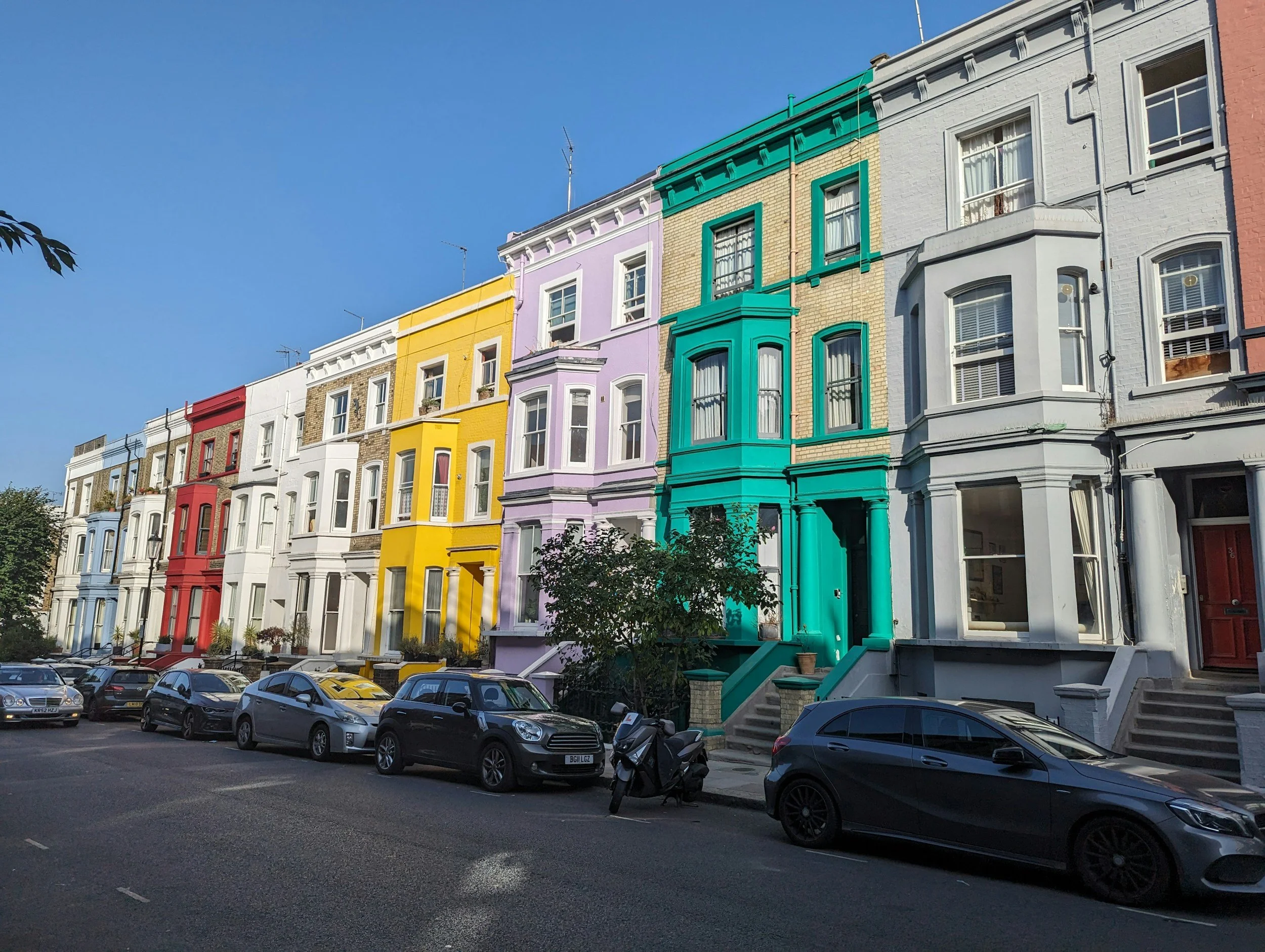
12 & 13 - Colours, charts, shades and similes. Familiar or obscure, simple or abstract, warm or chilling? Play around with colours and likeness.

26 - Number words and sayings - hundreds and thousands, millionaires and centurions…
21. Make a list of names of people (and animals) you know and have known -family, friends, neighbours, teachers, children, pets, shopkeepers … anyone. There is a starting point for writing somewhere in your list!
22. Dickens kept in his notebook a list of possible names for characters. Make your own list. Is there a character in there (maybe more) calling out for you to tell their story?
23. Janet and Allan Ahlberg made a series of board books that grew from their Baby’s Catalogue. In Doll and Teddy each double page spread is a pair of nouns linked by ‘and’. Make your own list of ‘and’ phrases. You don’t have to restrict yourself to nouns: to and fro, touch and go, bangers and mash. Make what you will of it.
24. Collocation: words that hang round together. Make a list of words that ‘hang around’ clothes (dart, waistband, tweed, sleeve, hem…) or doors (hinges, handle, letterbox, frame…) or supermarkets (aisle, yellow labels, trolley, checkout ….) or anything you fancy …
25. Compound words – thanks, Anglo-Saxons. Make a list of compound nouns. ‘Silent Poem’ by Robert Francis https://allpoetry.com/Silent-Poem is made entirely of compounds chosen, I think, to evoke New Hampshire. You could perhaps try to do the same for a place you know well. It is quite tricky! I am just wondering about writing one to describe the high street in my local Suffolk town…
26. Any number: make a list of numbers and of words to suggest quantity or size: oodles, millions, half, a sprinkling, a touch of frost, infinity and beyond. Is there the beginning of a piece of prose in your list?
27. Wag Wag Wag is a Walker book by Peter Howard which lists and illustrates things dogs do: sniff, bark, widdle, wag …. It’s a collection of verbs. Make your own list for an animal you know well – or not so well. Children love this one. Sometimes they choose to write about a human friend rather than an animal.
28. Children also like Michael Rosen’s Alphabet Poem which relies nicely on alliteration: ‘dogs drawing dad … owls open ovens, people polish pets, … shoes sing, teddies tap’. There’s a story of sorts in Rosen’s version so it is not all alliterative phrases, but they do work on their own and children like to make these about their friends. There is no need to use the whole alphabet. Go for what works.
29. In his celebration of words, Ounce Dice Trice, Alistair Reid lists names for elephants, cats, insects, whales, houses, fingers and ‘rude names for nitwits’. Elephants’ names include Wilbur, Bendigo, Wendell Tubb and Deuteronomy. Insects are named Twilliter, Limlet, Legliddy, Ugwob. Make your own lists. Names for anything you please.
30. Alistair Reid also lists light words and heavy words, squishy words and words to be said on the move. Make your own lists. Take one of his categories or choose your own – fast words, shy words, shouty words ….
31. Last day of the month. Let’s do favourite words again. If you have been listing words all month, maybe you could look back and choose your top twenty.