Why join a writing group?

NWP co-chair Emily Rowe explains how she first joined the project - and the power of a writing group.

“I first came across the National Writing Project when I was training to be a primary school teacher at the University of East Anglia. Through attending Writing Teachers groups firstly at UEA, then Ipswich and now recently with my fellow schools in our academy trust.

“I have found my teaching of writing in the classroom to be enriched through my own experiences of writing within a community of teachers. I have grown to understand the delicate nature of learning to write and how the experience of writing for yourself enables you to understand and teach writing at a much deeper level.
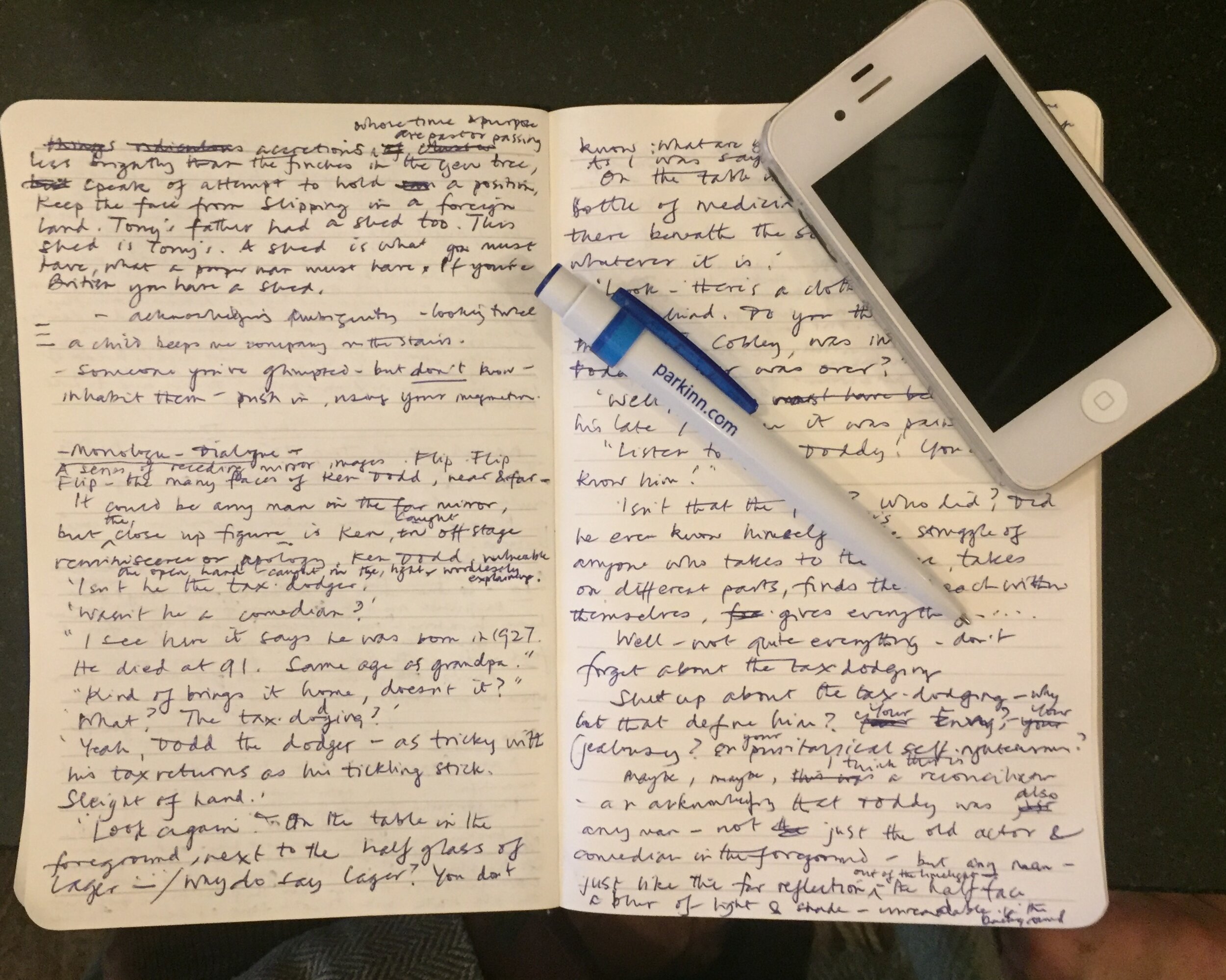
Writing from February 8th NWP Meeting at the National Portrait Gallery

Writing from February 8th NWP Meeting at the National Portrait Gallery

“Most importantly, I’ve seen first-hand the impact that this has had on my pupils. I find the sessions invigorating – with space to experiment with my own words and to also consider how activities and ideas can be adapted to suit the needs of the children in my class. I particularly enjoy meeting with teachers who work with a range of children from Early Years to A-levels, of whom all give and take from the sessions in equal amounts. It has been the most influential form of CPD during my three years of teaching, with each session I have attended being led by the co-founder of NWP – Dr Jeni Smith.

“It can be hard to explain to teachers why they should come along to a Writing Teachers group, particularly if they are not from an English background and feel nervous about the prospect of writing, but once they’re through the door I’ve always known them to come back!”

Wellcome Celebrations

The Whodunnit group gathered at Euston’s Wellcome Collection for their regular meeting on Saturday 25th January - where their numbers were swelled by members of other NWP groups, and even some newcomers - to celebrate a decade of the project and to mark the stepping down (but not stepping away!) of one of its co-founders, Simon Wrigley.

Inspired by Raymond Queneau’s Exercises in Style coupled with a focus on voice - and then by the exhibitions at the Wellcome: Play Well, Being Human and Misbehaving Bodies - writing was, as ever, varied and distinctive. From Stanislavsky to snails, buckets to bathrooms, cancer to Argos catalogues, writers shared their efforts to say the unsayable. 

Perhaps the dynamic of writing in a space like the Wellcome Collection comes from the disruption afforded by the tension inherent in art and in good museum curation. A disruption that provokes interesting writing.

We raised the roof of the Wellcome’s reading room with diverse voices telling diverse stories on diverse subjects. They were by turns funny, frivolous, far-seeing and philosophical.

The occasion was all that the NWP embodies. It was about using writing as a way of understanding, to explore and to be playful, to permit and to be permissive.

Jeni Smith, the projects’s other co-founder and Simon Wrigley’s partner in crime (this was the Whodunnit group, after all) spoke movingly about Simon’s immeasurable work in setting up and sustaining the NWP: the thousands of miles traversed and thousands of pounds spent in setting up groups up and down the country; a determination to succeed borne of suppressed rage and sadness at the straitjackets imposed on writing teachers in the contemporary educational climate.

Presentation3.JPG

Simon was presented, fittingly, with a hand-bound book of writing: of poems, personal messages, stories, and anecdotes from NWP members past and present; each uniquely commemorating the love, esteem, appreciation and gratitude felt for the man and his work. 

So we walk away collectively energised to write - for ourselves first and foremost - and for our students; because the more writing we do, the better we get at writing with them.

Presentation1.JPG

10 Years of NWP

ten

The National Writing Project is now a decade old in the UK: a worthy achievement and a significant milestone deserving of celebration.

At its heart that is ten years of encouraging and supporting teachers to become experts in the teaching of writing through a network of teachers’ writing groups. London’s ‘Whodunit group’ is one of the oldest and well-established of these, so it is fitting that it is their meeting this month which is being taken over to mark this special anniversary on Saturday 25th January.

We will meet at the Wellcome Collection, a museum on the Euston Road in London, in the cafe at 10am. NWP co-founder, Jeni Smith promises ‘writing fun and games’ between 10am and 1pm. The current exhibition at the Wellcome is called ‘Play Well’ and considers the transformational impact of play in our lives, so prompts will, of course, be appropriately playful!

All are welcome to join us. If you are an NWP member past or present, or considering becoming one in the future - and you are in London that weekend - come out and play! It will be the perfect opportunity to meet up with others from the NWP community, to write, to share, and to celebrate how far the project has come.

Started back in 2009 by Jenifer Smith, University of East Anglia, and by Simon Wrigley, English adviser for Buckinghamshire, 2004-2013, and chair of NATE, 2004-6, the UK’s project built on the long-running, successful US National Writing Project. Since then it has evolved through exciting partnerships, research and collaboration, carefully cultivated by the huge commitment, creative ideas and winning inspiration of Jeni and Simon.

Here’s to the next decade!

Spreading the word

NWP has been spreading the word about Writing Teachers groups at Goldsmith’s University, London.

Co-chairs, Jeni Smith and Emily Rowe received a warm welcome at the University during a recent conference about creative writing in schools. It was a great opportunity to engage with a receptive audience of PGCE students and English teachers. Students and teachers wrote together and spent time discussing how being a part of the NWP can develop individuals both personally and professionally. Jeni and Emily gained a highly positive response, with many seeking information about existing writing groups or how to start one.

“We were reminded of the deep concern felt by many teachers regarding the teaching of English within our current educational system - but we are certainly heartened by the bold and thoughtful teachers and prospective teachers whom we met,” explained Emily.

Happy new year to all, and we hope that the National Writing Project will continue to reach new teacher writers in 2020.

Goldsmiths.jpeg

November 2019: Change is afoot

November 2019 Change is afoot at the National Writing Project.

Alongside our shiny new website - and new and invigorated social media platforms - we have plenty of new faces on board to help Simon Wrigley and Jeni Smith move the project forward into its next phase.

At its core, it remains a network of teachers' writing groups, run by teachers for teachers. It is still a grass-roots, not-for-profit, teacher-owned research project that aims to explore writing and find out further answers to the question, 'What happens when teachers gather together to write and share their writing?' But we have done some further thinking about our principles and values, and about how best to promote them.

The first is that we work together to foster and celebrate the authentic voices of teachers and children across all phases of education. That means that in our ‘galleries’ on the website, for example, we will aim to do more celebration of the work that writing teachers and children do. And by ‘authentic’ we mean real writing - writing that diverges from formulaic structures and ‘Lego linguistics’ and encourages genuine independent voices to emerge in the classroom and beyond.

It is taking us a little while to transfer everything over from the old website, but you can still see favourite resources there at https://thenationalwritingproject.weebly.com/ , so fear not, nothing is lost - but please bear with us as we transfer everything over. Meanwhile, happy writing.

October: Sweet Memories

Writing from our own experience is very often a good way to start, and the mixed pleasures of sweets at Hallowe’en and Bonfire Night are a rich vein to tap.

Start with words. List all the names of sweets that you can think of. Refreshers, jelly snakes, Dime bars, gobstoppers…

Read round. One word from each person in turn. Keep going until everyone is out of words. Encourage repetitions. Advise people not to worry if someone has already said something they have on their list, after all, surely you can never have too many sherbet lemons!

Spend a bit of time sharing thoughts and memories about sweets. Remember, perhaps, Roald Dahl’s description of the sweetshop in Boy. Or here is Nigel Slater on ‘The Ritual of the KitKat’. Read the instructions –there is bound to be controversy. And he doesn’t even start on the whole business of eating –nibble the chocolate or bite straight in?

The lost ritual of KitKat-eating: the indescribably enjoyable art tat used to be involved in eating a bar if KitKat before some unimaginative clot decided to repackage it.

Slide the bar from its open-sided wrapper without tearing the wrapper. Do not puncture he gossamer-thin foil. Gently rub your finger over each finger of chocolate to reveal the word ‘KitKat’. Slide your thumbnail down the first of the valleys in between the chocolate fingers, this tearing the foil. (It is important to tear the foil in a straight line, and to keep the edges of the tear as smooth as possible.) Eat, finger by finger, breaking off a new one as you go, rather than all at once.

It must be said that there were some who liked to unwrap their KitKat without cutting the foil Those who did, inevitably also smoothed the foil out afterwards, so that it was completely flat and smooth. They then rolled it up into a tiny ball. Because of its inherent thinness, KitKat foil made a smaller ball than any other chocolate bar.

From Eating for England The Delights and Eccentricities of the British at Table. Nigel Slater.

Launch into a longer piece of writing. The prompt, really, is the list of sweets and the talk surrounding them. It is a memory of sweets, the buying and the eating of them, the feel and look of them. Whatever comes to you.

Enjoy the stories and memories. More will arise as you read and listen.